


How to Make Pride Events More Intersectionally Accessible
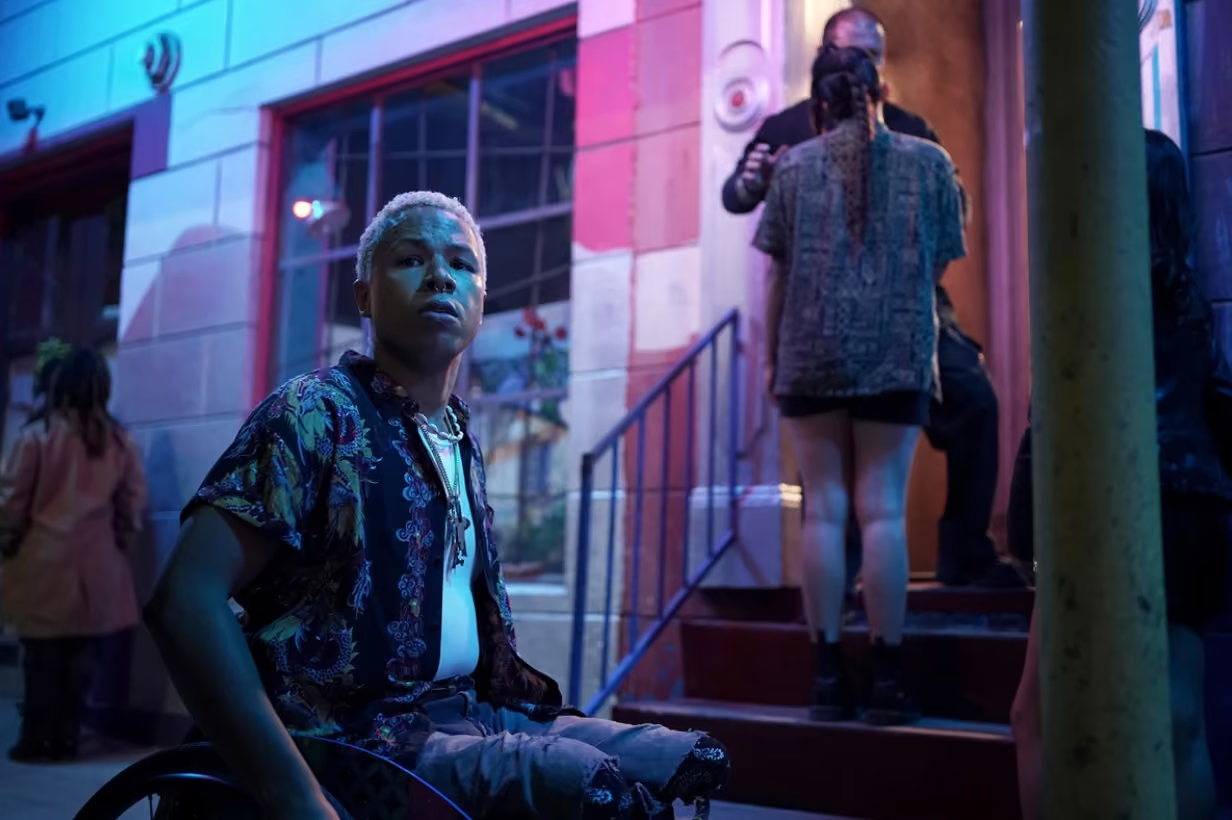
A checklist for planning more inclusive and community-centered events.
Happy Pride Folks!
For many queer people, June is a month of both celebration and complication. Joy and grief often exist side by side this time of year.
At its origins, Pride was not a parade. It was a riot. A refusal. An act of survival led largely by Black and brown transgender women and gender-nonconforming people who were done being brutalized and ignored. Their resistance was messy, urgent, and unapologetically human. That spirit remains at the heart of what Pride means to me.
Especially now, as trans rights continue to be attacked by the current presidential administration, many people feel emboldened to enact violence against trans communities. And alongside that reality, there must also be space for joy, rest, connection, and care. Resistance movements need room for all of it.
At The Expansive Group, we value and strive to practice an intersectional, accountable love for ourselves and the people around us. Part of that means learning how to hold multiple truths at once.
So in that spirit, I want to talk about something that doesn’t always make it onto the Pride planning checklist: accessibility.
Because if we are serious about community and about truly including the full spectrum of people who make up our LGBTQIA+ world then the way we plan and host events matters. Accessibility, in all its forms, is an act of love. It is also an act of accountability.
Why Does Accessibility Matter At Pride?
Before getting into the nuts and bolts of event planning, I want to share the values that shape how I approach accessibility work. At its core, I believe everybody deserves access to the information, experiences, community, and spaces we create.
Many of us have been socialized to think about accessibility in very narrow ways or to see it as something meant for “other people.” But accessibility is not a niche concern. According to the CDC, more than 1 in 4 adults in the U.S. live with a disability, and that number increases significantly with age. Disability is a normal part of human life, whether temporary, chronic, visible, or invisible.
And access needs don’t exist in a vacuum. They are shaped by the intersections of our identities and lived experiences including disability, race, class, immigration status, caregiving responsibilities, housing access, and more. We also know that disability disproportionately impacts Black and Latine communities, as well as people living in poverty. These inequities are not accidental. They are connected to the same systems many of us are already working to dismantle.
That’s why my understanding of accessibility is broad. It’s not just about whether someone can physically enter a space. It’s about whether people can meaningfully participate, feel considered, and move through an event with dignity and care. If you want to read more about ableism and how it shows up in our culture, examining ableist language is a great place to start.
If Pride is truly about community, then accessibility cannot be an afterthought. It has to be part of how we build the space from the beginning.
6 Tips to Consider When Planning Your Accessible Event
A lot of accessibility work happens before anyone enters the room (physically or virtually!) This is where many of the most important decisions get made.
Note, several of the tips in this section and the next come courtesy of Rose Lange (she/her), a fat liberationist, scholar, and sex therapist based in Illinois who also happens to be a dear friend of mine. Her expertise is woven throughout, and I'm grateful for her labor.
- Don’t Plan Alone When Possible
- Co-host your event with a trusted peer, friend, or colleague. Having another person involved means you’re not solely responsible for troubleshooting access needs in real time, managing logistics, or navigating interpersonal conflict if it arises. Live events are unpredictable, and it helps to not hold everything alone.
- Ask About Access Needs Ahead of Time
- Send attendees a survey before the event and invite them to share their access needs. When creating the survey, explain what the event will involve and what accommodations are already being provided. Including examples can also help people identify what support may be useful to them.
- For example, if you’re screening a film with captions and hosting a panel discussion afterward, attendees can better assess whether they may need an interpreter, reserved seating, or other accommodation.
- Be Clear About Logistics
- When sharing event details, be upfront about the basics like cost, ramps or elevator access, public transit accessibility, parking availability, masking expectations, food availability, seating options, or what attendees should bring.
- This information helps people assess their finances, safety, energy, and overall capacity before committing. For people navigating caregiving responsibilities, chronic illness, food or housing insecurity, or limited transportation access, these details can determine whether attending is possible at all.
- Have Your Marketing Reflect Your Values
- If your event is meant to welcome diverse communities, your promotional materials should reflect that. Include disabled bodies, fat bodies, racially diverse people, and varied relationship structures in your imagery and messaging.
- And don’t stop at visuals. Consider reaching out directly to local organizations, community leaders, or mutual aid groups to attend, sponsor, or co-host. Outreach is part of accessibility too.
- Be Clear About the Kind of Space You’re Creating
- Clearly communicating the values and culture of your event can help attendees better understand whether the space will feel safe and aligned for them.
- Things like “🍉,” “🌿-friendly,” or “🍺-free” can signal shared values and community norms.
- Sometimes, being explicit about who the event is not for can also create a greater sense of safety and ease for attendees.
- Share Materials Ahead of Time
- If you plan to use slides, videos, readings, or other media during the event, consider sending them to attendees beforehand. This gives people more flexibility to engage with the material in ways that work best for them — whether that means adjusting font sizes, using screen readers, printing materials out, or simply reviewing things at their own pace.
Use These Accessibility Checklists For Your Pride Event
Accessibility can feel overwhelming when we think about it as one massive thing we’re supposed to “get right.” But often, it starts with slowing down and asking thoughtful questions about who was considered while planning the event.
The checklists below are not exhaustive, nor are they meant to shame anyone for what they can’t provide. Instead, think of them as invitations: prompts to help you create spaces where more people can participate, feel anticipated, and move through the event with dignity and care.
- Furniture & Seating
- Are chairs available without armrests, or with removable/movable armrests?
- If there are booths or tables, is there enough room for fat attendees and wheelchair users to navigate comfortably?
- Are there tables that are at heights that are accessible for wheelchair users?
- Are there flexible seating options for people with different body and mobility needs?
- Sound & Communication
- Are microphones and speakers available for attendees with hearing disabilities or for larger/noisier spaces?
- If audio is being recorded or streamed, can microphones capture both hosts and audience participation clearly?
- Lighting & Sensory Needs
- Are there areas where lighting can be adjusted depending on attendees’ needs?
- Are any bulbs flickering, harsh, or distracting?
- Is the space lit safely enough for people to navigate comfortably?
- Are there areas that offer varying levels of stimulation?
- Location & Navigation
- Are ramps, curb cuts, elevators, handrails, and automatic doors available?
- If parts of the space are inaccessible, has that been communicated clearly ahead of time?
- Does the event require medical support or emergency planning, and if so, has that been coordinated?
Virtual & Hybrid Accessibility Checklist
- Platform Accessibility
- Does the virtual platform offer live captions or transcription tools?
- Can attendees adjust audio, visuals, or screen settings based on their needs?
- Is the platform compatible with screen readers and keyboard navigation?
- Participation & Inclusion
- Are virtual attendees able to meaningfully participate, rather than just observe?
- If the event is hybrid, are virtual participants being acknowledged throughout the event?
- Are audience questions and discussion being repeated into microphones or shared in chat?
- Flexibility & Access
- Would virtual attendance make the event more accessible for people navigating chronic illness, caregiving responsibilities, transportation barriers, financial limitations, or safety concerns?
- Are recordings or asynchronous options available for attendees who cannot participate live
General Accessibility Checklist
- Breaks & Body Needs
- Have you explained the event timeline at the beginning of the event?
- Have you identified quiet spaces, rest areas, or places attendees can step away if needed?
- Introductions & Orientation
- Are speakers stating their names before speaking?
- Are brief visual descriptions being offered when appropriate?
- Interpretation & Language Access
- If interpreters are present, are speakers addressing attendees directly rather than speaking to the interpreter?
- If interpretation is needed, are qualified interpreters being provided whenever possible?
- Have multilingual attendees and Deaf/hard-of-hearing attendees been considered in planning?
- Visuals & Presentation Design
- Do slides, graphics, or videos include alt text or verbal descriptions?
- Are visuals easy to read, high contrast, and visually uncluttered?
- Masking and Vaccine Status
- Will you be providing masks at the event? Are they mandatory?
- Will rapid COVID-19 testing be encouraged or required before attending?
- Will proof of COVID-19 vaccination be required for attendance?
An Important Note on Language
Words matter, and one meaningful way to practice accessibility is being thoughtful about how you refer to people in your space and materials.
Different communities have different relationships to language, so it’s important not to assume one “correct” way to refer to everyone. For example, many people intentionally use terms like Deaf, Black, or fat as identity-centered language rooted in culture, politics, and reclamation.
Avoiding these words doesn’t necessarily make you more respectful. Sometimes it communicates discomfort with the identity itself.
When possible, let people tell you how they’d like to be referred to. If someone offers a correction, receive it with gratitude rather than defensiveness. You do not need to be perfect — just open, respectful, and willing to adjust.
Accessibility Is an Ongoing Practice
No guide can anticipate every access need, identity, or lived experience. Accessibility is not a box to check once — it’s an ongoing practice of listening, adjusting, and making room for people more intentionally over time.
And even small acts of access matter.
Disabled people, fat people, and other marginalized communities are often expected to navigate inaccessible spaces quietly or bridge the gap themselves. Choosing to anticipate people’s needs (even imperfectly) communicates something powerful: I considered you before you arrived.
Just as Pride does not end on June 30th, our responsibility to care for one another shouldn’t end when the event is over. Keep learning, keep asking questions, and keep building spaces where more people can belong.
Additional Resources
If this post sparked your curiosity and you want to keep going, here are some places to start:
- Queer Disabled History: Activists & Events By Maddie Fowler and Gracee Wallach, Disability-inclusive Sexual Health Network (DSHN) - A site that provides some pretty neat historical timelines of political & legislative movements and some of the Queer disabled activists who were impactful throughout history.
- Crip Camp: A Disability Revolution - A Netflix documentary that traces the origins of the disability rights movement to a summer camp for disabled youth in the early 1970s. Essential, joyful, and long overdue watching.
- ADA.gov: Effective Communication - A clear breakdown of who is legally required to provide interpreters and other communication supports under the Americans with Disabilities Act.
- Principles of Pluriversal Design - A podcast episode (43 min. 27 sec. total) that aired on February 11th, 2025. The episode features a conversation with 3 experts who discuss the formation and application of the pluriversal design paradigm, especially as it relates to earlier paradigms and the political moment at the time of recording.
- Sins Invalid - A disability justice project that provides a framework and resources for folks to join the movement and fight for collective human rights- with a focus on disabled, Queer, trans, and BIPOC folks (because that’s who leads the project!)
- 10 Principles of Disability Justice
- Web Accessibility Initiative
- Disability Statistics in the U.S.: What the Numbers Tell Us About Accessibility
Looking for Support? The Expansive Group is Here for You.
If you are looking for some extra support, know that a therapist or coach can help provide even more tools and space to explore. All of our offerings are affirming of neurodiversity and multicultural identities, sex and non-traditional relationship structures, and are supportive of queer and trans identities.
You can connect with one of our therapists or coaches using our intake form. We offer individual and relationship support. In addition, check back regularly for support group openings where you can be in a community while healing.
Picture Credit: Queer as Folk