


Reimagining Your New Year’s Goals: Setting Intentions With Art
How you can use collage as a tool for change
As the year comes to a close, I find myself becoming more introspective. Winter naturally asks many of us to slow down so I honor that invitation. This season reminds us that for things to blossom, we require periods of release and rest. Because of this, I prefer approaching my yearly intentions through a seasonal lens instead of the all or nothing new years goals we see depicted in the media. New year's resolutions can feel like pressure and fall into black and white thinking, ‘you accomplished that’ or ‘you didn't’. That kind of binary thinking can be more limiting than liberating. My favorite way to end and start the year is through collage.
I’m a collage artist and therapist, but before this I was a crafty kid who found creating to be a fun way of passing time. Insecure about my inability to create via drawing or painting, collage felt like an easier route into visual arts. Recovering from a history of self harm, I found collage art to be a productive way to keep my mind, spirit, and hands occupied. I integrated this with my love for second hand shopping and repurposing by using thrifted books, found materials aka my neighbors thrown out magazines, and family archival photos. I’ve filled over 12 years of journals with words and ripped up paper, archiving my personal and relational progressions. I found writing and collage making to be incredibly powerful as a tool for reflection, processing, and visioning change.
In this article, I share how and why collage can be a tool in your healing journey, even if you don’t consider yourself creative or “artistic.”
Collage Art Can Be A Tool for Reflection and Healing
Before trends like junk journaling and vision board parties were widely shared, I’d do my own new year wrap up with the journal(s) I had accumulated throughout the last 12 months. During high school I was able to discover collage art and writing as mediums of release and reflection after struggling with my identity. Collage art became a craft—and then a coping skill—for me. I’d fill my journal with anything: scribbles, old receipts, long handwritten entries, holiday cards, whatever I was hoarding in my phone’s camera roll—anything that helped me recall the ebbs and flows of the past year. Years later, I reflected on what an insightful gift it was to leave myself such extensive documentation, an archive of sorts. Now, I enjoy teaching others how collage can help others cope too.
Admittedly however, this kind of revisiting could be activating. I’d have to walk away from all I saw, thought and felt. Maybe later in the day or sometime in the next week I’d grab all of my collage supplies and let my eye lead me to whatever stuck out. I’d go through pages looking for things that evoked a feeling I wanted to bring into my next year, find images and color to bring this to life.
This kind of image making has always felt important to me. Collaging without direction can feel overwhelming for some, but to those who are up for the challenge, I encourage leaning into the fact that there is no wrong way to do this. We are able to access our inner children, the version of ourselves who was able to imagine without limitation, crayons, markers, pencils, even mud as world building.
Collaging Can Support Self-Trust, Confidence, and Somatic Release
When it comes to collage—scissors, ripping paper by hand, stapling, or gluing—the possibilities are endless. Making art so independently, driven by feeling and being, can help with a sense of self esteem.
There’s a sense of confidence, self trust, and somatic release built when creating without limit. The image made can start and end on your own timeline, as collage is something you can continuously build on. There is a sense of empowerment developed with this sense of expression. The drive behind this activity can be a tool to support personal change.
Visualization Through Art Can Support Cognitive and Emotional Health
The art of visualization, whether through collage, drawing or painting, has been shown to support those struggling with cognitive decline as well. Cognitive decline can be associated with diagnosis like Dementia and Alzheimer's but those are more extreme examples. It’s important to normalize that cognitive decline can be a common symptom in anxiety and depression, especially after a traumatic event. This end of year activity has year long relevance and applies to various populations.
A Prompt To Help You Find Language for What’s Hard to Say
During this yearly practice, I’ve found it helpful for processing and finding new language for situations I struggled with throughout the year. Collage can be a bridge for expressing what we cannot say with words. This can be a new tool for someone who may feel more expressive through image and color. A prompt I offer in my group collage workshops that helps put this into practice is:
“Think of a topic. Find three words in The Feelings Wheel. Make a collage utilizing only those colors.”
This prompt can center who or what a person is grieving, supporting an individual in the meaning-making stage of their loss, with past clients focusing on identity or relational shifts. When following a reflective prompt, or setting aside time to generally reflect with an intention such as “what I want to cultivate in the new year,” can be the starting point for change.
Using Collage to Turn Your Intentions Into Action
Looking at the stages of change, collage can also be seen as a tool for contemplation or preparation, allowing someone to break down a larger idea into its more tangible parts. Here is a demonstration:
A person wants to explore their cultural identity further in the new year. They look through photos online, in magazines and family photos. From these photos they notice images of food and people dancing stand out the most. By cutting out these images and pasting them together, they can explore the way they are called towards these two things. That these can be tangible ways of exploring their cultural identity: consuming foods that are grown on their ancestral lands and looking more into music from that area, creating playlists to immerse themselves in throughout the year. The collage, drawing or painting they create can center these objects and activities, while also allowing the individual to imagine actionable tasks for this self exploration and self actualization.
Whether this reflective visualization activity is done in January, anytime during the winter or your personal cultural new year, or even the spring when things bloom again, this can be something you turn back to time and time again.
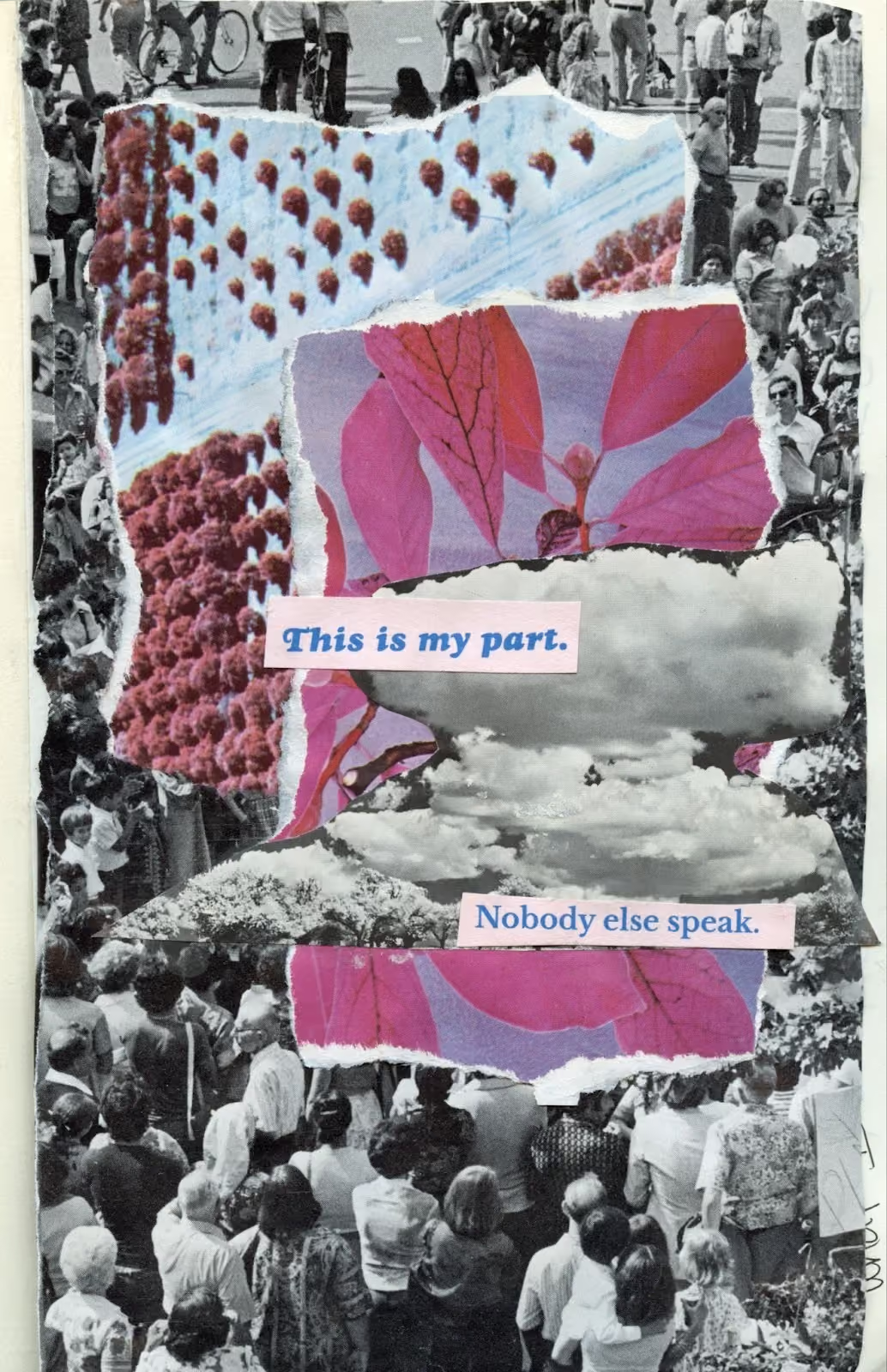
Above is an analog collage made in April 2022 I made surrounding the theme of reclaiming my voice, taking space and honoring my narrative. You can find examples of my therapeutic collage making in these published pieces:
- Black Collagists: The Book
- Womanly Magazine Issue No. 8: THE FUTURE IS FAT
- An Encyclopedia of Radical Helping
The beauty of image-making through collage as a New Year’s tool is not only its simplicity, but the way it can be translated across race, gender, age, and language. I want to offer a reminder, and radical permission, to create your own traditions during this time of year, one of which can be this practice, or whatever spin you want to put on it. What matters is the pause and being present in the creative process. Remember the most important thing is that you have fun with it. Enjoy creating!
Looking for Support this Season? The Expansive Group is Here for You.
We’re wishing you and yours an easeful and joyful holiday. If you find yourself needing some extra support this season, know that a therapist or coach can help provide even more tools and space to explore all that family and the holidays can bring up. All of our offerings are affirming of neurodiversity and multicultural identities, sex and non-traditional relationship structures, and are supportive of queer and trans identities.
You can connect with one of our therapists or coaches using our intake form. We offer individual and relationship support. In addition, check back regularly for support group openings where you can be in a community while healing.
Photo Credit: Gentefied