


When Masturbation Feels Complicated
A Sex Therapist Shares How to Find Desire, Safety, and Connection in Your Body
In honor of Masturbation May … let’s talk self pleasure!
What comes to mind when you think of the word masturbation? For me, I think play, self-pleasure, a grounding tool for stress relief. Maybe a ménage à moi, if you will. A past version of me would have thought: taboo, private, something shameful and not to be spoken about.
As a sex therapist, I’ve heard plenty of messaging about masturbation that has led to varying opinions and relationships with solo pleasure. For some, that messaging even makes self-pleasure feel inaccessible.
Understanding where those messages originated can be the first step toward building a connective relationship with your body. In this article, we’ll explore how cultural beliefs about masturbation take shape, how traumatic experiences cause further disconnect with our bodies, and how you can create a more embodied relationship with pleasure.
How Cultural Messages Shape Our Beliefs About Masturbation
Cultural messaging, or “scripts,” are shared narratives that shape how we think, behave, and relate to others—often without us realizing it. These covert beliefs can get internalized as our own, and over time, repeated exposure makes them feel deeply ingrained. While scripts are considered neutral shared beliefs, they can lead to guilt and shame when that script isn’t a consciously held belief.
For instance, when we are taught that something is taboo, we are, in a way, being told that it is wrong or abnormal, even if it’s not something that we truly believe to be wrong or abnormal. As you can imagine, there are plenty of scripts surrounding masturbation–I shared some of mine above.
Scripts shape expectations. When a topic is considered taboo, it stops us from feeling safe to discuss or learn about that topic. If we were left to use the information solely inherited from cultural scripts, we may refrain from engaging with that topic completely.
With masturbation, these expectations may surround performance, productivity, and efficiency. Without adequate sexual education, many of us reach for the resources that are most available, like porn or our peers, to teach us what is right and wrong, what is sexy and what’s not. This requires us to lean on assumptions or play the game of telephone with our other miseducated peers. While there is certainly porn content that can be a great resource for learning about pleasure (hello CHEEX!), porn generally shapes narratives that revolve around sex as goal-oriented and performative.
Feeling overwhelmed? You’re not alone.
This is a big topic that will take a bit longer to unpack. Societal norms inform every aspect of life. Where cultural opinions differ, there are often deep discussions being had over those differences. Every culture has long held beliefs and traditions regarding sex, masturbation, the pursuit of pleasure, or the abstinence of it, all of which have meaningful differences that might impact how two different people approach it.
Trauma Can Impact Pleasure and Connection to Your Body
Scripts aside, engaging in sexual pleasure has been proven to actually reduce stress hormones, releasing both dopamine (the feel-good one) and oxytocin (the love one), while also counteracting cortisol (the stress one). It has been shown to promote sleep, improve focus, and alleviate aches and pains.
As animals, the biological benefits seem too good to pass up. However, as more complex beings that experience guilt and shame, as well as the effects of trauma, it may be hard to engage with your body in a way that can stimulate pleasure.
When a traumatic event occurs, we learn to disconnect our mind from our body. This is an automatic response from our nervous system to protect the body from perceiving pain. After a traumatic experience, that protective measure can stay with us–showing up with even the smallest reminder or cue. In these moments, the mind may become flooded with thoughts or worries, which can make it very challenging to communicate with and recognize the felt sense in the body. Now think about how that disconnect impacts the ability to feel pleasure. In fewer words, when we experience things that make our bodies feel unsafe, pursuing pleasure can feel impossible, but with the right tools and support, there is hope.
How to Rebuild Safety in Your Body and Reconnect With Pleasure
Between unlearning scripts and rebuilding safety post trauma, it's normal to see rebuilding a connection with our bodies as a challenge. The trick is to start slowly, focusing on how your body responds to different sensations. Here are some things to try:
- Focus on felt senses and what you can touch. Pay attention to the texture, temperature, and pressure of your touch. Are your fingertips soft or calloused? Are they warm, cold, or somewhere in between? How hard are your fingertips pressing? Now switch and think about how your body feels beneath your fingertips. If you notice your mind wandering or your thoughts becoming more critical, pull back. Judgement doesn’t have a place here–be neutral, name facts, notice what you feel.
- Allow yourself to explore and play without a goal in mind. Create a sensual ritual. Take a shower or bath, massage your body with lotion or oil, light a candle, treat yourself to a new toy or erotica subscription, and tune into your senses. Get curious about what feels sexy and what feels less enjoyable. Next time, switch up your methods but stay curious!
- Play with sounds. Narrate what you are doing or seeing. Use affirming language for your body as you narrate. Listen to audio erotica (apps like Quinn or Dipsea are great for this!). Close your eyes and focus on what you hear.
- Scan your body. Notice any sensations that you feel as you move from head to toe and back up again. As you do this, try tensing and relaxing your muscles. Now pair each contraction with an inhale and release with an exhale. You can do this in sections, going muscle by muscle, paired with each breath. For a longer script, try this one.
I encourage you to try one or a few of these suggestions and be real with yourself about how it felt. If you’d like to go deeper and you’re open to reflecting on your own cultural scripts, I invite you to journal with the following questions in mind:
- How old were you when you learned about masturbation?
- What was your first experience of touching yourself?
- What messages have you learned about masturbation? Do these beliefs still hold up for you?
- What is the purpose of masturbation for you? How has that purpose evolved over time?
- When was the last time you explored your body with the sole intention of play? Exploration? To regroup or unwind?
- What scripts would you like to rewrite and live by?
Just like learning a new skill, dipping your toes in a new hobby, or trying to mesh with a new friend group, each person’s approach will be different and unique to them. There are no expectations here. There are no “right” ways to experience self-pleasure or reconnect with your body. Let that be your script.
Looking for Support? The Expansive Group is Here for You.
AND lastly this topic is exactly what you can bring to a therapist/sex therapist. If you are looking for some extra support, know that a therapist or coach can help provide even more tools and space to explore. All of our offerings are affirming of neurodiversity and multicultural identities, sex and non-traditional relationship structures, and are supportive of queer and trans identities.
You can connect with one of our therapists or coaches using our intake form. We offer individual and relationship support. In addition, check back regularly for support group openings where you can be in a community while healing.
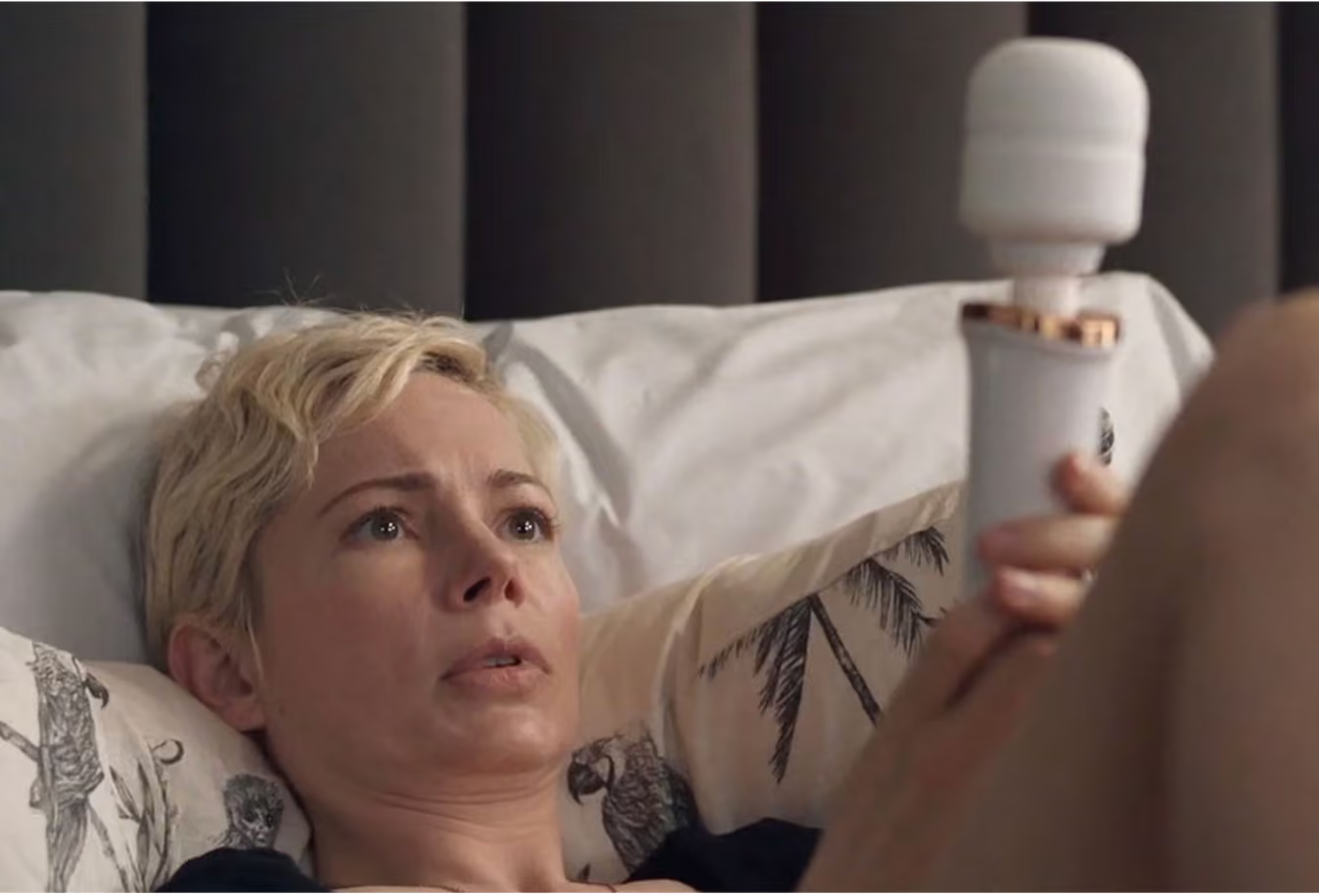
Picture Credit: Dying for Sex